Does It Feel Like a Rib Is Out of Place? Symptoms, Causes, and Chiropractic Care

A sharp catch beside the shoulder blade. Pain when you twist or take a deep breath. A tender spot along the rib cage that seems to appear after lifting, coughing, exercising, or sleeping awkwardly.
People often describe these symptoms by saying, “My rib is out of place.”
That phrase communicates the feeling well, but it is not usually a literal diagnosis. In most cases, a rib has not fully dislocated. The discomfort may instead come from irritated rib joints, strained muscles between or around the ribs, inflamed cartilage, or reduced movement in the middle back and rib cage.
Because pain in the ribs or chest can also have causes unrelated to the muscles and joints, a proper evaluation matters. Here is what “a rib out of place” can mean, what symptoms commonly occur, and when chiropractic care may be appropriate.
Important: New, severe, unexplained, or worsening chest pain should be medically assessed. Call 911 for chest pressure or tightness, pain spreading to an arm, neck, jaw, back, or stomach, or chest pain accompanied by shortness of breath, sweating, nausea, faintness, or a sense that something is seriously wrong.
What Do People Mean When They Say a Rib Is “Out”?
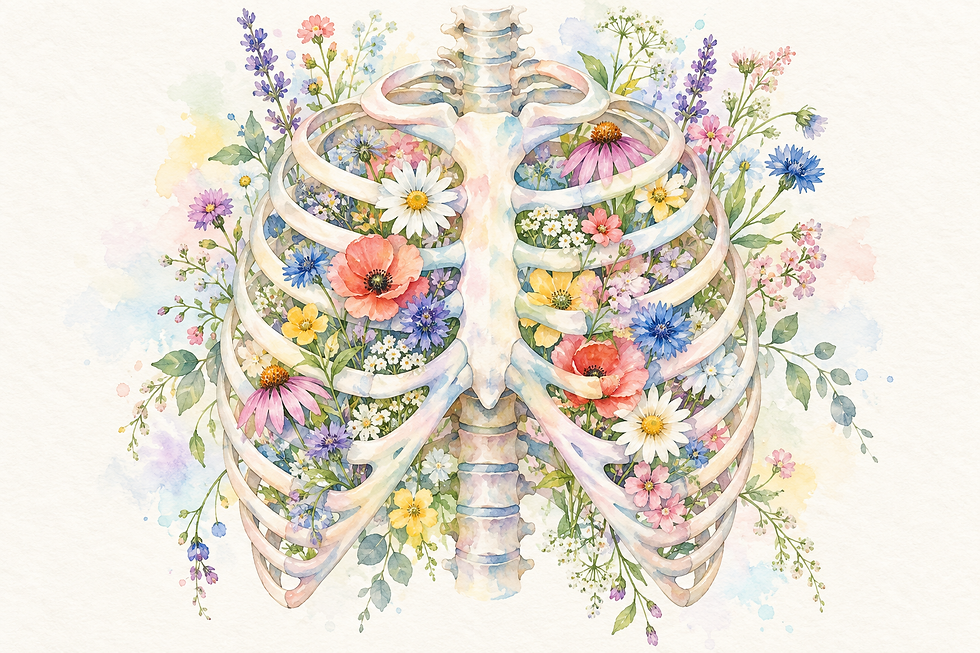
The rib cage is designed to move. Most people have 12 pairs of ribs. In the back, the ribs connect to the thoracic—or middle—spine at small joints called the costovertebral and costotransverse joints. In the front, many ribs connect to the breastbone through cartilage.
These joints, muscles, and connective tissues move slightly every time you breathe, reach, bend, or rotate.
When someone feels that a rib is “out,” the actual problem may be:
Rib-joint irritation or reduced mobility: A joint where a rib meets the spine can become painful and move less comfortably, often together with stiffness in the thoracic spine.
Muscle strain or spasm: The intercostal muscles between the ribs and other muscles of the chest or upper back can become irritated by lifting, twisting, exercise, prolonged posture, or forceful coughing.
Costochondritis: This is inflammation of the cartilage where a rib joins the breastbone. It commonly causes tenderness and pain at the front or side of the chest that can worsen with movement, deep breathing, or pressure on the area.
A bruised or fractured rib: A fall, collision, direct blow, or sometimes severe coughing can injure a rib. Pain following trauma should be assessed, especially if breathing is difficult.
Slipping rib syndrome: This less-common condition generally affects ribs 8 through 10. Loose or unstable cartilage allows a lower rib tip to move abnormally and irritate a nearby nerve. It may cause clicking, popping, or sudden pain in the lower chest or upper abdomen.
Pain referred from another structure: The thoracic spine, shoulder, lungs, digestive system, gallbladder, heart, and other structures can sometimes produce pain felt near the ribs.
A true rib dislocation or partial dislocation is different from ordinary mechanical rib pain. It is more likely to follow significant trauma or occur with instability and requires medical evaluation.
Do not try to force a visibly deformed or injured rib “back into place.”
Common Symptoms of Mechanical Rib or Chest-Wall Pain
Musculoskeletal rib pain often changes with movement, position, breathing, or pressure. Symptoms may include:
A sharp, aching, or catching pain beside the spine, under a shoulder blade, or along the rib cage
Pain that increases with twisting, reaching, bending, coughing, sneezing, or taking a deep breath
A specific tender spot that hurts when pressed
Tightness or muscle spasm in the middle back
Discomfort after a new workout, repetitive activity, prolonged sitting, or an awkward sleeping position
In some lower-rib conditions, a popping, clicking, or slipping sensation
These clues can suggest a mechanical source, but they cannot safely rule out heart, lung, digestive, or other medical problems. Chest pain should never be self-diagnosed solely because it changes with movement or feels tender.
Why Can Rib Pain Start?
Rib-area symptoms sometimes begin after an obvious event, but they can also build gradually. Common triggers include:
Repetitive reaching, throwing, rowing, or overhead work
Heavy lifting or an unexpected twisting motion
A forceful or persistent cough
Contact sports, falls, or motor-vehicle accidents
Prolonged rounded posture or limited thoracic movement
Sudden increases in exercise volume
Pregnancy-related changes in posture and rib-cage mechanics
Joint hypermobility or connective-tissue conditions
The trigger does not always identify the diagnosis. For example, both a muscle strain and a rib fracture can hurt when breathing. A clinician uses the health history, examination, and—when indicated—medical imaging or referral to distinguish among possible causes.
When Rib or Chest Pain Needs Urgent Medical Attention
Call 911 for sudden or severe chest pain, especially when it:
Feels like pressure, squeezing, heaviness, or tightness
Spreads to the arm, shoulder, neck, jaw, back, or stomach
Occurs with shortness of breath, sweating, nausea, dizziness, fainting, unusual weakness, or pale or blue skin
Follows a serious collision, fall, or blow to the chest
Occurs with severe difficulty breathing or coughing up blood
Seek prompt medical care for fever, a new or worsening cough, increasing shortness of breath, pain that is steadily worsening, unexplained weight loss, a new rash, or pain that repeatedly wakes you or does not improve.
People with osteoporosis, cancer, heart or lung disease, a bleeding disorder, or long-term steroid use should have a lower threshold for medical evaluation.
How Is Rib Pain Evaluated?
At Vibrant Health Chiropractic, an evaluation begins with listening. Your chiropractor will want to know where the pain started, what makes it better or worse, whether an injury occurred, and whether you have any symptoms that suggest a medical referral is needed.
A musculoskeletal examination may assess:
Breathing and symptom behavior
Tenderness along the ribs, muscles, breastbone, and thoracic spine
Upper-back, shoulder, and rib-cage movement
Posture and movement patterns
Muscle strength and, when appropriate, neurologic function
Not every patient needs an X-ray. Imaging or medical referral may be appropriate when the history or examination suggests a fracture, significant trauma, infection, cardiopulmonary disease, or another condition outside the scope of conservative musculoskeletal care.
Slipping rib syndrome can also be difficult to see on a standard still image. A medical specialist may use a targeted examination or dynamic ultrasound when the condition is suspected.
Can a Chiropractor Help With Rib Pain?
Chiropractic care may be one part of conservative treatment when an examination suggests that pain is coming from the joints and soft tissues of the rib cage or thoracic spine and warning signs have been ruled out.
Care should be matched to the individual and the suspected cause. Depending on the findings, a plan may include:
Gentle joint mobilization or manipulation
Soft-tissue techniques
Movement and posture coaching
Breathing exercises
Stretches or strengthening exercises
Temporary modification of activities that repeatedly aggravate the area
The goal is not to repeatedly “put a rib back in.” A more accurate goal is to reduce pain, restore comfortable movement, and help the surrounding muscles and joints tolerate daily activity again.

Some people experience temporary soreness after manual treatment. A qualified clinician should discuss the expected benefits, alternatives, and risks before care begins.
Research on manipulation specifically for rib pain is limited. Evidence for spinal manipulation is stronger for certain forms of low-back and neck pain than it is for isolated rib-joint pain. That is why an individualized examination, realistic expectations, exercise, and referral when appropriate are important parts of responsible care.
Chiropractic treatment is not a substitute for emergency or medical care when pain may come from the heart, lungs, a fracture, infection, or another serious condition.
What Can You Do at Home for Mild Rib-Area Pain?
If the pain is mild, followed ordinary activity rather than significant trauma, and no warning signs are present, simple measures may help while you arrange an evaluation:
Avoid movements that sharply reproduce the pain, but do not remain completely still for prolonged periods.
Take comfortable, unforced breaths instead of deliberately breathing shallowly.
Try heat or a wrapped cold pack for short periods, depending on which feels better.
Change position regularly if sitting aggravates the area.
Return to lifting and exercise gradually as symptoms settle.
Ask a physician or pharmacist whether an over-the-counter pain reliever is safe for you. These medicines are not appropriate for everyone and can interact with health conditions or other medications.
Do not wrap or tightly bind the chest unless specifically instructed by a medical professional. Restricting breathing can create complications.
Rib Pain That Keeps Returning Deserves a Closer Look
Repeated rib-area pain does not necessarily mean that a bone keeps moving out of position. It may reflect an activity that continually overloads the area, limited movement elsewhere, muscle weakness or guarding, persistent coughing, hypermobility, or a diagnosis that has not yet been identified.
A useful care plan should do more than chase the painful spot. It should consider the movements and demands that bring symptoms on, provide a working diagnosis, explain what improvement should look like, and change course or refer you if progress is not occurring.
Chiropractic Care for Rib and Upper-Back Pain in Cambridge and Geneseo, IL.
If rib or upper-back discomfort is limiting your breathing, sleep, work, or exercise—and emergency symptoms are not present—the team at Vibrant Health Chiropractic can evaluate whether the problem appears musculoskeletal and whether chiropractic care is appropriate for you.
We provide personalized chiropractic care at our Cambridge and Geneseo, Illinois locations. If your examination suggests that another type of evaluation is needed, responsible care includes directing you to the appropriate medical provider.
Ready to have your rib or upper-back pain assessed? Book an appointment online or call our Cambridge office at (309) 764-7044 or our Geneseo office at (309) 944-1213.
Frequently Asked Questions
Can a rib actually go out of place?
A true rib dislocation or partial dislocation can occur, but it is not what most people with ordinary rib-area pain have. The sensation may come from an irritated rib joint, muscle strain, inflamed cartilage, or another chest-wall condition. Significant trauma, visible deformity, or breathing difficulty requires medical evaluation.
What does an irritated rib joint feel like?
It may cause a localized ache or sharp catch near the spine or along the rib cage. Twisting, reaching, coughing, sneezing, deep breathing, or pressing the area may reproduce the pain. Similar symptoms can occur with other conditions, so an examination is needed for a diagnosis.
How long does rib-joint or muscle pain last?
Recovery varies with the cause and severity. A mild strain may improve over days to a few weeks, while costochondritis or an injured rib may last longer. Pain that worsens, persists, or occurs with other symptoms should be evaluated.
Is It Safe to Exercise With Rib Pain?
Avoid activities that cause sharp pain or make symptoms progressively worse. Gentle movement may be reasonable when no injury or warning signs are present, but returning to exercise should be gradual. Seek professional advice following trauma, with breathing difficulty, or when the cause is unclear.
Should I See a Chiropractor or a Medical Doctor for Rib Pain?
Call 911 for possible heart-attack symptoms or severe breathing difficulty. Seek prompt medical care following significant trauma or when fever, worsening shortness of breath, coughing up blood, unexplained weight loss, or steadily worsening pain is present.
For non-emergency pain that appears related to movement or the muscles and joints, a chiropractor can screen for warning signs, evaluate the area, and refer you when needed.
This article is for general educational purposes and is not a diagnosis or a substitute for individualized medical advice. If you have new, severe, or unexplained chest pain, seek appropriate medical care.


Comments